
Strong Body, Healthy Mind: Nick Trosko on Building Habits That Last
For International Men's Day, Evolt's Nick Trosko shares insights on mental resilience, nutrition and sustainable habits for a healthier life.
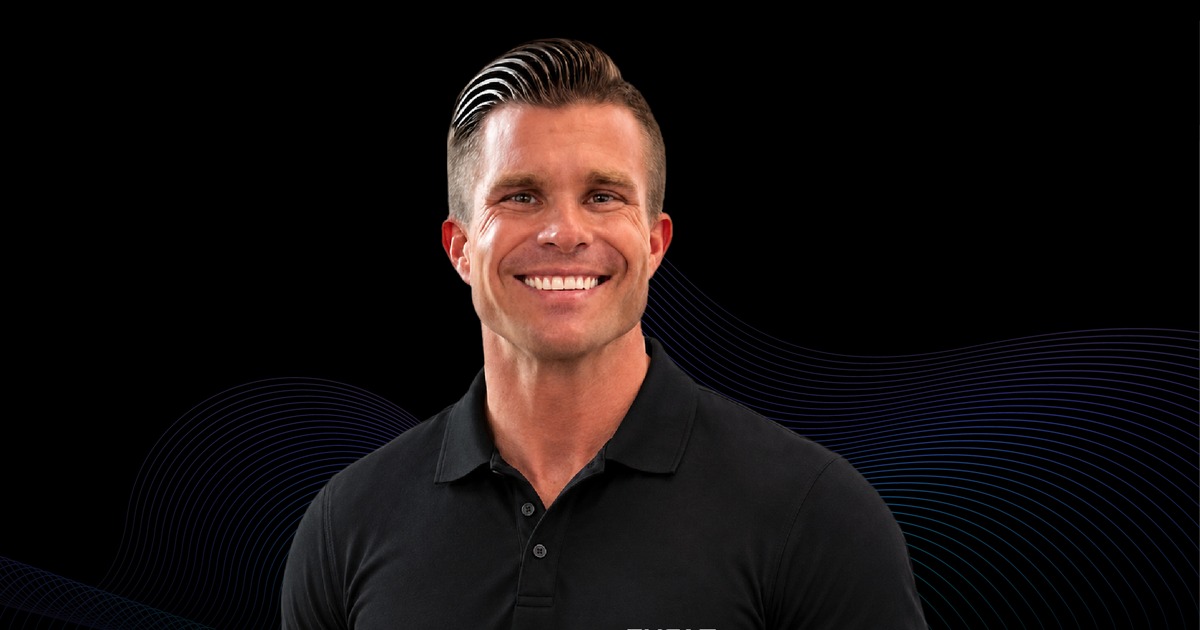
What does strength really mean as we get older? For Evolt Chief Revenue Officer Nick Trosko, the answer has changed considerably over the years.
After a lifetime of lifting weights, a major surgery, the loss of his father and the demands of balancing leadership with family life, Nick has developed a different perspective on what it means to be strong.
Today, it's less about physical appearance or personal bests and more about maintaining the strength, mobility and independence to live life on his own terms.
As a business leader, father of two and owner of three dogs, Nick knows that maintaining good health requires more than motivation. It takes discipline, adaptability, and habits that can withstand the demands of everyday life.
For Men's Health Month, we spoke with Nick about the experiences that shaped his approach to health, how he manages professional pressure, and why two simple words have guided him since college.
From Building Muscle to Protecting Independence
For most of his life, resistance training has been Nick's constant.
Running, walking and other forms of cardio have come and gone, but lifting weights has remained a priority through demanding work schedules, injuries and major life changes.
"Resistance training is the one habit that has stayed with me, regardless of what's happening in my life," he says.
While the habit has remained, his motivation has evolved.
In his younger years, training was largely about aesthetics. Today, his focus is on preserving the physical capabilities that will allow him to remain active, healthy and independent for decades to come.
"I want to preserve muscle, mobility, and strength so I can stay active and independent as I get older," he says. "The workout might change, and the intensity certainly changes, but the commitment to resistance training has stayed."
It's a perspective that reflects an important shift in men's health: understanding strength not simply as a measure of performance, but as an investment in long-term quality of life.
The Life Experiences That Changed His Perspective
Two deeply personal experiences helped reshape Nick's relationship with his health.
The first was losing his father a few years ago. Witnessing the physical limitations his father experienced prompted Nick to think more seriously about aging and what he wanted his own future to look like.
"I don't fear getting older as much as I fear losing my independence," he says.
The second came when a torn distal biceps tendon required major surgery.
After years of consistent training, Nick suddenly faced the challenge of rebuilding strength and control in his left arm almost from scratch.
Recovery demanded patience and a different approach to exercise. He became more intentional about warming up, maintaining mobility, improving balance, adjusting training intensity and allowing sufficient time for recovery.
"It reminded me that being strong isn't just about how much weight you can lift," he says. "It's about staying physically capable of doing ordinary things for as long as possible."
Both experiences reinforced something he now considers fundamental: building strength matters, but preserving it is equally important.
Leading Under Pressure Without Sacrificing Health
Leadership brings responsibility, demanding schedules and moments when work can feel all-consuming.
For Nick, maintaining his physical and mental well-being is essential to managing that pressure effectively.
When stress builds, he relies on two familiar outlets: resistance training and walking.
The gym provides structure, a physical challenge and an opportunity to disconnect from work. It also offers a social connection that he has come to value more as he's gotten older.
Walking serves a different purpose, creating space to reflect, reset and regain perspective.
"When work feels overwhelming, getting outside helps me shift from focusing on stress to recognizing what I'm grateful for," he says. "The problems don't necessarily go away, but once I'm in a better headspace, they start to feel much more manageable."
Over time, Nick has also learned to recognize when his professional commitments are beginning to affect his well-being.
Physical exhaustion and an unusual lack of motivation are two warning signs he pays attention to. When they appear, he makes a conscious effort to reclaim time for himself, often through movement.
But he doesn't view balance as a constant division between work and personal life. He believes there is value in both rest and ambition, and that each can support the other.
"I want to be successful professionally, but not at the expense of my physical or mental health," he says. "And taking care of those things ultimately makes me more effective at work."
Making Health a Priority in a Busy Life
Between leading a team, raising two children and caring for three dogs, Nick understands how easily personal health can slip down the priority list.
His approach is to make healthy habits part of everyday life rather than treating them as something to fit in when time allows.
He prioritizes resistance training, walks most days and finds opportunities to move throughout long periods spent sitting at work.
Nutrition is another essential part of his routine.
"You can train consistently, but if you're not paying attention to what you're eating, you're undermining much of that effort," he says.
For his family, preparation makes the difference.
Weekend meal planning, cooking in advance and keeping nutritious food readily available help make healthier choices more convenient throughout the week.
Of course, schedules change. Work commitments, travel and family responsibilities mean that routines constantly need adjusting.
Rather than aiming for a perfect schedule, Nick focuses on creating systems that are realistic and sustainable.
"It requires planning, discipline, and a willingness to continually ask yourself what you could be doing better," he says.
His philosophy is a reminder that consistency doesn't require every week to look the same. It requires making health a priority even when circumstances change.
The Health Metric Every Man Should Understand
When asked which health measurement he believes every man should know, Nick's answer is body composition.
While body weight provides one piece of information, body composition offers a more detailed understanding of the body's muscle and fat mass.
Higher levels of body fat, particularly visceral fat, are associated with increased health risks. Maintaining skeletal muscle, meanwhile, plays an important role in supporting strength, metabolic health, mobility and healthy aging.
Understanding both can help men make more informed decisions about their training, nutrition and long-term health.
"Body composition gives you a measurable snapshot of both," he says. "It helps you understand where you stand physically and, when tracked over time, whether you're making progress or moving in the wrong direction."
For Nick, the value lies in having meaningful information that can guide action.
Rather than relying exclusively on body weight or appearance, tracking body composition over time can reveal changes in muscle and fat mass that might otherwise go unnoticed.
Two Words That Have Stayed With Him: Never Stop
Some of the most valuable advice stays with us long after we first hear it.
For Nick, that advice came from an older classmate in college who was exceptionally fit.
His message was simple: Never stop.
Decades later, those words continue to influence how Nick approaches health, fitness and life.
They also capture the mindset he hopes to pass on to his children.
"Life is going to change. There will be periods when you can't train as often as you'd like or eat exactly the way you want," he says. "That's normal. The important thing is to adapt to your circumstances and find ways to keep those habits alive."
Nick has made a conscious effort to establish positive habits around movement and nutrition within his family from an early age.
He wants his children to understand that health doesn't have to be complicated, extreme or restrictive. It can coexist with enjoyment, flexibility and a full life.
"You can enjoy life and still take care of yourself."
For him, never stop doesn't mean training harder every day or maintaining an unrealistic standard. It means continuing to invest in your health, finding ways to adapt and recognizing the value of small, consistent efforts over time.
Taking the First Step Toward Better Health
For men who recognize they've been putting their health last, Nick's advice is to start with education.
With so much health and fitness information available through credible educators, online resources, YouTube and AI tools, there are more opportunities than ever to learn about exercise, nutrition and healthy habits.
He encourages men to identify what they want to achieve, whether that's reducing body fat, building muscle, improving fitness or preparing for a specific physical challenge.
From there, the goal is to develop an achievable plan that works with their schedule, budget and lifestyle.
"The more you understand, the less dependent you are on someone else to tell you what to do," he says.
And when it comes to his own health, his most important non-negotiable remains unchanged.
Consistent resistance training.
It's the habit that has supported him through different stages of life and the one he intends to maintain for years to come.
Stronger for Life: Why Knowing Your Numbers Matters
Nick's story highlights a powerful message for Men's Health Month: strength isn't defined by age, appearance or how much weight you can lift.
It's about maintaining the physical capability to enjoy life, meet its challenges and remain independent as you get older.
Resistance training, balanced nutrition, recovery and consistent movement all contribute to that goal. Understanding how your body is changing can help you make those efforts more purposeful.
That's where body composition measurement becomes valuable.
The Evolt 360 body composition scanner provides insights into skeletal muscle mass, visceral and subcutaneous fat mass, and segmental fat and lean mass distribution.
By tracking these measurements consistently, such as every four to six weeks, men can gain a clearer understanding of changes in their body composition and use that information to guide realistic health and fitness goals.
Because investing in your health isn't about achieving one particular number or reaching a finish line. It's about building the strength and habits that support the life you want to lead.
This Men's Health Month, take inspiration from Nick's philosophy. Understand your body, invest in your strength and build habits that last.
Above all, never stop.
Discover more about understanding your body composition at evolt.health.
Related posts

Evolt 360 Successfully Completes ISO Certification for Data Security

Evolt X Fitstop Riccarton
